A note from Cary (the foodie one)
Susan,
Hope you are closing in on your end result research objectives… gather it all… sort it later is my advice… get all the raw data/feeds/thoughts/impressions that you can and sort them back here in a cabin somewhere on a Lake…
No food pictures? Man-o-man….. lol.
Your other pictures more than make up for that deficit…
Be good! Work hard!!
Cary,
Thank you so much for your note.
Oh my gosh, there is so much here in Clew Bay. Way more than I can fit into the blog posts, or I’d never get to the next day. It will take a year to digest all this. I have over 700 photos and short videos. And writing class starts 6 days after I get back, so I’ll need story pages by then. It’s amazing to me to have this kind of time-luxury to see, feel, read, and write, even though I feel pressed by how much there is to fit into the shortness of the time. These quick notes that friends have sent, like yours, have bolstered me when it’s overwhelming.
An important priority in my plan for coming here was to experience what I didn’t know. I knew I was coming to the land of my ancestry, and I knew I had big gaps in what I know of my family history. Eventually I’ll write a better story for all the meandering and serendipitous incidents.
There’s a section of my research called Long Echoes and there definitely are reverberations here. Long Echoes are events and patterns that keep repeating like
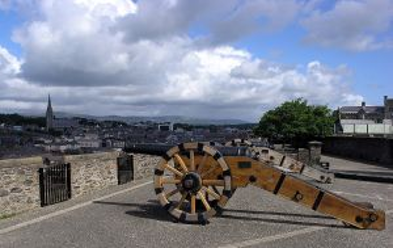
- The ongoing “planting,” plantations in Ireland and then America, and your ancestral land in Wales.[1] [2]
- An Gorta Mór, not the first famine in Ireland, and its causing by the English administration’s practices. You can read part of the story in the Log post 260910. The taking of land was ongoing through centuries.
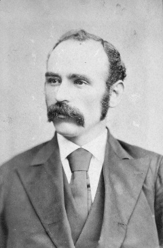
- The Michael Davitt Museum[3] which preserves the history of strength and activity of the people of County Mayo. The Land League was initiated here. “Following the founding meeting of the Mayo Tenants Defence Association in Castlebar, County Mayo on 26 October 1878 the demand for The Land of Ireland for the people of Ireland was reported in the Connaught Telegraph 2 November 1878.[4]
- The still-not-having-definitive-answers as to why Gráinne and Tibbott sided with the English sometimes, any more than answers around Éamon de Valera’s decisions about the 1921 Treaty with England which divided the Country into 26 and 6 Counties.[5]
- Patrick Pearse rousing his fellow countrymen to fight for independence that you read about in the Log Post 260911 including his effort to reinstate Irish as the people’s language, as well as calling on the memory of Grace O’Malley to inspire them.
- The resistance of those Irish living in and around Clew Bay, Grace O’Malley’s territory, in the early 20th Century that you read about from Noreen in the Log post of 260915.
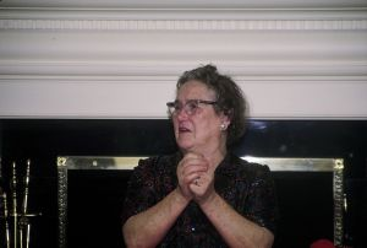
- Even my grandmother’s reciting poetry from her childhood until the day she died at 103 in 1996, reminds me of the Bardic tradition and the importance of remembering and reciting.
- In our times, there’s a resurgence of Irish language learning, led especially by young people using social media and technology for, as Edmund Spenser in A View of the State of Ireland (1596) wrote,
“Soe that the speach being Irish, the hart must needes be Irishe; for out of the aboundance of the hart, the tonge speaketh.”
My grandmother agreed when she said, “The English took our language. You can’t have a country without a language, you know.” (FYI, she also said, “the English never left a country undivided.”)
About the food photos – here is one post: https://thegrainneproject.com/260907-2/ and there should be another one tomorrow, or the next day.
Slán!
These posts do build on information included in earlier posts. If you would like to read them in order from the beginning, here is the link to get started: https://thegrainneproject.com/260809-2/
This post is a good one for leaving comments, especially if you know about de Valera, or any of these important historical figures. If you have some ideas – or especially if you have corrections – I’d love to have them. Please include sources if you have them. The rules of writing historical fiction is that verifiable facts have to be correct.
[1] (https://en.wikipedia.org/wiki/Plantation_(settlement_or_colony))
[2] Photo by By SeanMack – Their own work, CC BY 3.0, https://commons.wikimedia.org/w/index.php?curid=3788900
[3] Image of Michael Davitt from Wikimedia, https://commons.wikimedia.org/wiki/File:Michael_davitt.jpg

[4] https://en.wikipedia.org/wiki/Irish_National_Land_League
[5] I leave it to much wiser minds than mine to sort out de Valera’s thoughts and strategies. I only know he made a decision, or failed to hold out for a decision, that favored the English and that his reasons and wisdom are still discussed.
As for Gráinne and Tibbott, 1st Viscount Mayo, I’m getting some ideas about what they probably knew about the vicious brutality of the English all over the island, as well as the similarity to other imperial countries’ practices (Spain and France particularly), their O’Malley/Burke relative strength, plus the unreliability of allies among Irish Clans during that time.
Love this!
Thank you, Carlee,
This whole blog, especially with your good help, has been amazing for sorting and pinning my memories in place.
What an amazing photo of your grandmother, and her telling of her truth.
And so many people here look like her!